

You know that feeling when you walk into a small business and immediately know exactly what they do, who they help, and where to go for what you need?
Now think about the opposite. You land on a business website and…crickets.
There’s a giant photo of someone smiling at a laptop. A headline that sounds inspirational but doesn’t actually explain anything. Six different buttons. And somewhere, buried approximately 47 scrolls down, is the information you actually came looking for.
If you’re a CEO or entrepreneur, your website shouldn’t make potential customers work that hard.
Your homepage has a pretty straightforward job: tell people what you do, show them why they should care, build some trust, and give them a clear next step.
Simple, right?
Well…sometimes we make it harder than it needs to be.
Let’s go back to the basics and look at what might be holding your homepage back—and how Layerly can help you build a website that actually works for your business.
4 home page habits that need to hit the curb…
Before we start talking about what belongs on your homepage, let’s talk about what might be getting in the way. Because sometimes the problem isn’t that your website needs more—it actually needs a little less.
A homepage can look polished, professional, and perfectly functional while still making it harder for potential customers to understand your business. And when visitors have to work too hard to figure things out, they’re not exactly sticking around to crack the code.
Here are four common homepage habits that could be costing your business more than you realize.
1. You’re trying to put your entire business on one page.
Your business does a lot. We know. You have multiple services, an impressive history, a great team, awards, certifications, projects, testimonials, and approximately 847 other things you could tell someone.
But your homepage doesn’t need to say everything.
One of the most common small business website mistakes is treating the homepage like a junk drawer. Every piece of information gets tossed in because, well, someone might want to know it someday.
The result? Visitors get overwhelmed.
Your homepage should give people the big picture. What do you do? Who do you help? Why should they choose you? Where should they go next?
Save the deeper details for the pages designed to explain them.
2. You’re talking about yourself instead of the customer.
“We’re committed to excellence.”
“We have decades of experience.”
“We’re an industry leader.”
Okay. But what does that mean for the person visiting your website?
Your potential customer isn’t necessarily looking for a company with the fanciest collection of accomplishments. They’re trying to solve a problem.
Maybe they need a contractor they can trust. Maybe they’re trying to grow their business. Maybe they’re tired of their current provider. Maybe they simply need someone who knows what they’re doing.
Your homepage should show that you understand those problems.
Talk about your expertise, absolutely. Just connect it back to why your expertise matters to the customer.
3. Visitors have to play detective.
Here’s a simple test: send someone who knows nothing about your business to your homepage.
Then ask them: What does this company do? Who do they help? What am I supposed to do next? If they can’t answer pretty quickly, your website may be making them work too hard.
Clear beats clever.
Your headline should make sense. Your navigation should be easy to follow. Your services should be understandable. And your call to action should be obvious.
If you’re wondering, “Why isn’t my website generating leads?”, this is a good place to start.
Confused visitors don’t usually stick around to solve the mystery.
4. Your website doesn’t look like the business you run today.
Your business has probably changed since your website was built.
Maybe you’ve added services. Hired new people. Completed bigger projects. Started working with different customers. Expanded into new markets.
But if your website still tells the old version of your story, you’re giving potential customers an outdated picture of your business.
A website redesign isn’t just about making things prettier. One of the biggest website redesign benefits is making sure your website actually reflects where your business is today.
Your business grows.
Your website should grow with it.
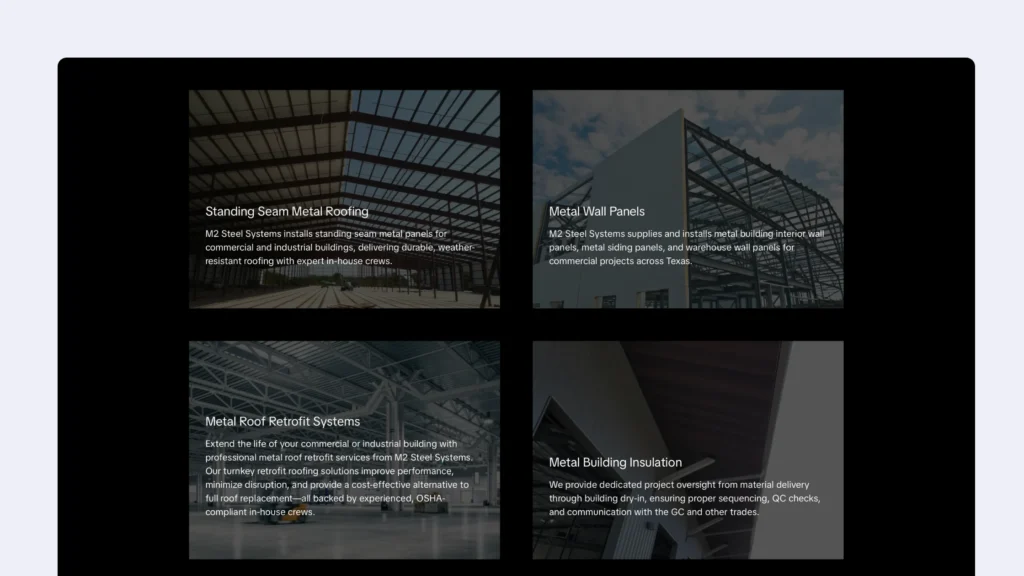
Okay, so what should go on my home page?
The good news? Fixing these problems doesn’t require internet wizardry. A strong homepage needs to work for both the people visiting it and the technology helping them find it. Here’s what that looks like.
1. Start with clear navigation.
Your header should make it easy to find the important stuff. Depending on your business, that might include Home, About, Services, Projects, Blog, and Contact.
And don’t forget a clear call-to-action button like “Request a Quote,” “Schedule a Consultation,” or “Get Started.”
Your navigation should also work well on mobile, with easy-to-tap links, readable text, and a mobile menu that doesn’t require a treasure map to figure out.
2. Give your content some structure. (H1, H2s, etc)
Your homepage should guide visitors through a logical story: what you do, who you help, how you help them, why they should trust you, and what to do next.
Your website’s heading structure matters here, too. Your main page topic should have a clear H1, with major sections using H2s and supporting sections using H3s. Think of them as the outline of your page.
And don’t use heading tags simply to make text look bigger. That’s what your design styles are for. Your headings should actually organize the content.
3. Don’t forget the behind-the-scenes stuff.
There’s plenty happening under the hood that visitors never see—but search engines do.
Your homepage should have a descriptive SEO title and meta description, optimized images with useful alt text, clean URLs, internal links, and a structure that makes sense to search engines.
It should also load quickly, work properly on mobile devices, use HTTPS, and provide a smooth experience for visitors.
For local businesses, your website can also include information that helps search engines understand your business, such as your name, location, phone number, and other organization details.
4. Give your footer a job.
The footer might be at the bottom of the page, but it shouldn’t be an afterthought.
Include links to your important pages, helpful contact information, your business location and hours when applicable, social media links, and important policies such as your privacy policy or accessibility information.
Think of it as the website’s “Need anything else?” section.
Yep, your home page doesn’t retire once it launches with Layerly.
Here’s a myth we’re always happy to bust: Once your website launches, the project is over. Nope. Your business isn’t frozen in time, so your website shouldn’t be either.
At Layerly, we help CEOs, entrepreneurs, and marketing managers develop professional, custom websites around their businesses—not around some cookie-cutter template.
We help organize the story, clarify the messaging, design the website, build the pages, and create an online presence that supports the way the business actually operates.
And then we stick around.
Our website subscription service includes website management services, website maintenance included, and website updates included. That means when your business changes, your website can change with it.
New service? Add it.
New team member? Introduce them.
New success story? Tell it.
Need to improve your SEO? Let’s work on it.
It’s a hands-off website solution for busy business owners who have, you know, an actual business to run.
The goal isn’t just to give you a professional website without the hassle. It’s to give you a website that continues working alongside your business.
→ Figure out which subscription is best for you and your business: Launch the survey >>
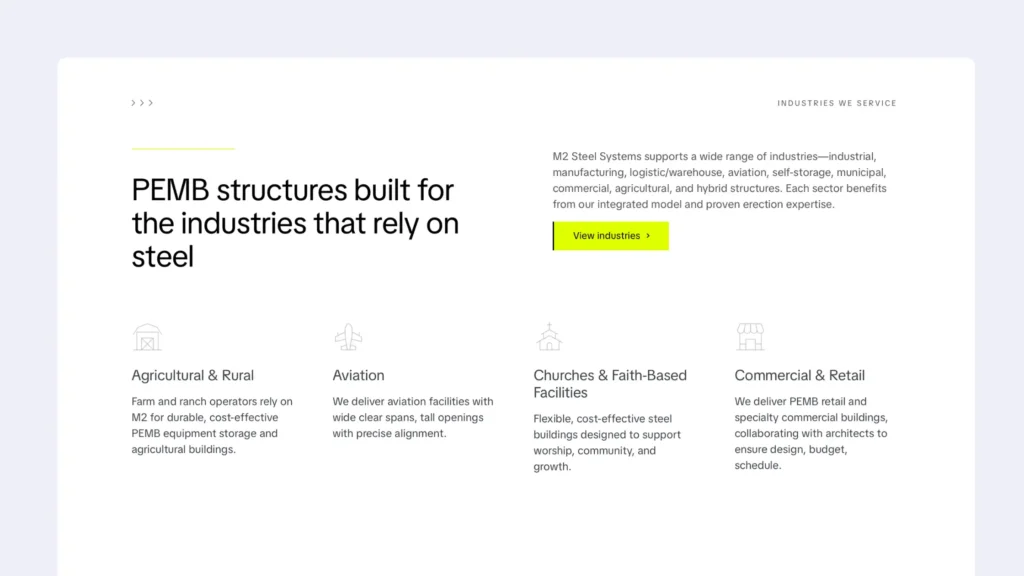
There you have it. Here’s the internet magic…
Marketing managers and entrepreneurs, your homepage doesn’t need to do everything. It needs to do the right things. Make it clear. Make it useful. Make it easy to navigate. Show people that you understand them. Give them a reason to trust you. Then make the next step obvious. Your homepage is often the beginning of the conversation.
And if managing all of this sounds like one more thing you’d rather not add to your already ridiculous to-do list, that’s where Layerly comes in. We provide done-for-you website design, ongoing support, SEO, website management services, and an all-inclusive website service built for growing businesses. Because your website shouldn’t just sit there looking pretty. It should work.
Get started with Layerly. Book a call today!
