
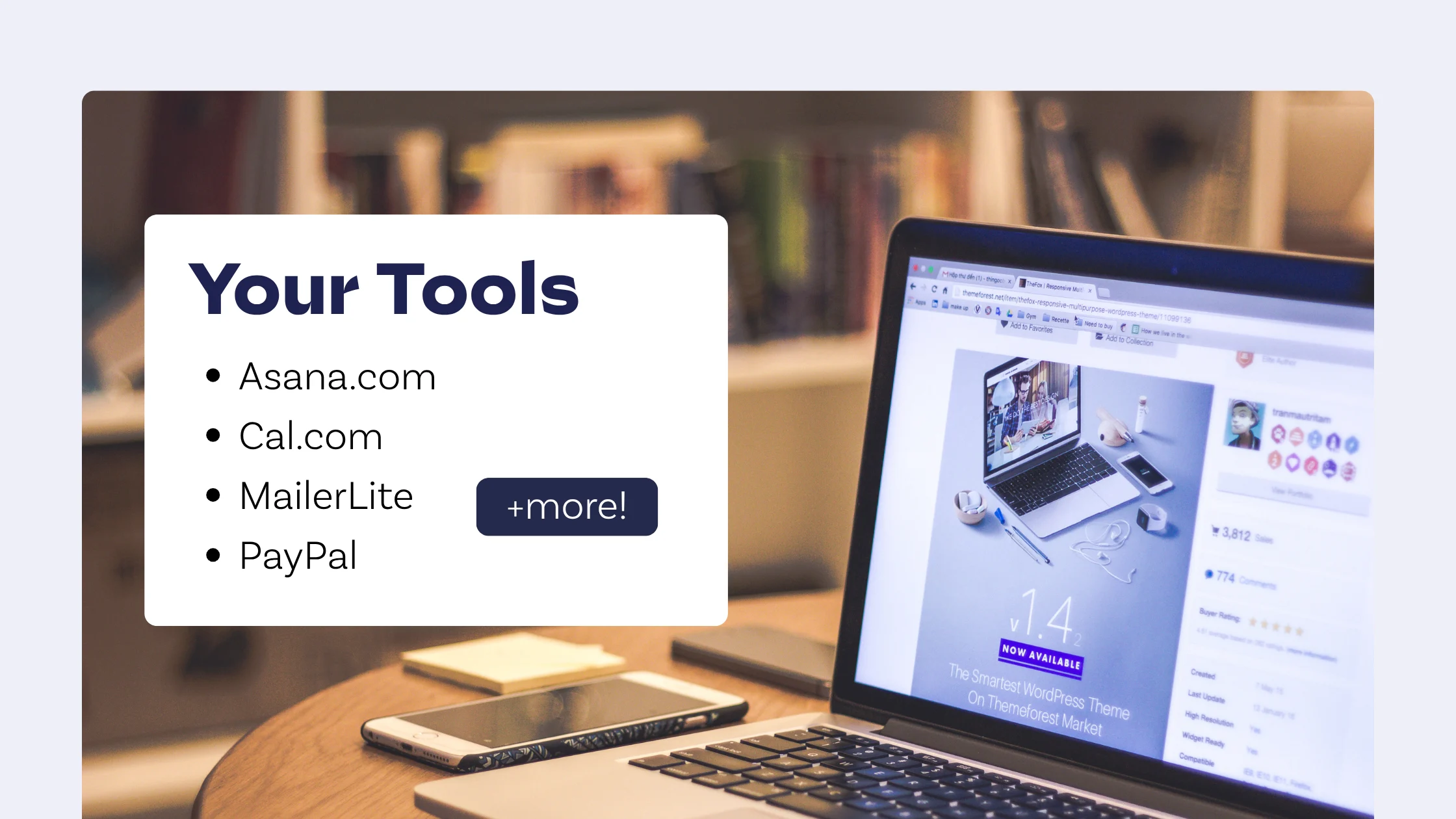
Running a small business means your browser probably has 37 tabs open right now. One tab is your accounting software. Another is your calendar. Somewhere in there is your email, your CRM, your invoicing software, and the YouTube video teaching you how to fix something you definitely didn’t plan on fixing today.
Welcome to entrepreneurship! The good news? There are some incredible tools available today that make running a business easier than ever before. Better yet, many of them are free or ridiculously affordable for startups and solopreneurs.
The bad news? Your website somehow became another piece of software you’re expected to manage yourself.
No thanks.
Your website shouldn’t become another chore on your already overflowing to-do list. It should quietly generate leads, build trust, and help you attract new customers while you focus on growing your business.
Here are the small business tools we think every entrepreneur should have in their toolbox…including ourselves.
Tool Set #1: The essentials running behind the scenes
If you’ve ever found yourself searching your inbox for “that one email,” digging through sticky notes for a customer’s phone number, or wondering which notebook you wrote your brilliant business idea in… congratulations. You’re officially running your business the same way millions of entrepreneurs started theirs.
The problem isn’t that you’re disorganized. It’s that your business has probably grown faster than your systems have. What worked when you had three customers and one service quickly becomes overwhelming when you’re juggling leads, invoices, meetings, follow-ups, and approximately 47 browser tabs. (We’re not judging. Ours look the same.)
The good news? You don’t need expensive software or a full-time operations team to get organized. A handful of smart, often free, business tools can help you look more professional, stay on top of your work, and save hours every week. Let’s build the foundation that helps everything else run a little smoother.
A Professional CRM
A CRM (Customer Relationship Management platform) keeps your leads, customers, projects, conversations, and follow-ups in one place.
Even if you’re a solopreneur, this is one of the smartest investments you can make.
Great options include:
Most of these platforms start with generous free plans and can automate reminders, follow-up emails, task assignments, and project tracking.
Professional Email
Nothing says “legitimate business” quite like an email address that ends with your company instead of @gmail.com. Professional email instantly builds trust and credibility.
Some great providers include:
It may seem like a small detail…until you’re asking someone to trust you with thousands of dollars. Professional email platforms also come with some pretty handy perks.
Business Banking
Open a dedicated business bank account. Seriously. Keeping personal and business finances separate makes bookkeeping, taxes, reporting, and your future accountant dramatically happier.
For bookkeeping, there are excellent beginner-friendly platforms like:
Many now use AI to automatically categorize transactions, organize expenses, and generate reports. As your company grows, you can always partner with an experienced bookkeeper—but starting with organized records makes that transition incredibly smooth.
Calendar Booking
Stop playing the world’s longest game of “Does Tuesday at 2:00 work?”
A calendar booking tool lets customers schedule time with you instantly based on your real availability. No back-and-forth emails. No double bookings. No accidentally scheduling two meetings at the same time because you forgot to update your calendar.
Some great options include:
Many also integrate directly with your CRM, video conferencing software, and AI assistants, automatically creating meeting links, sending reminders, and even helping summarize your calls afterward.
Email Marketing
Social media is great…until the algorithm decides your post belongs in witness protection.
Email marketing gives you a direct line to your customers without relying on someone else’s platform. Whether you’re announcing a new service, sharing helpful resources, or staying top of mind, an email marketing platform helps you grow alongside your business.
Some popular options include:
Most offer free plans to get started and integrate with your website, CRM, booking software, and AI tools, making it easier to create campaigns, automate follow-ups, and build customer relationships without writing every email from scratch.
Payment Processing
Getting paid should be the easiest part of your day.
Fortunately, it usually is.
Many banks now offer built-in payment processing, and there are plenty of trusted providers that make accepting online payments simple for businesses of every size. Whether you’re sending invoices, selling online, or accepting payments in person, today’s payment platforms are fast, secure, and surprisingly easy to set up.
Some of the most popular options include:
More time doing the work that actually earns the money.
Tool Set #2: The ones harnessing AI
You’ve probably heard people say, “Work smarter, not harder.” It’s a little cliché… But it’s also surprisingly good advice.
The goal isn’t to pile on more software just because everyone on LinkedIn is talking about it. It’s to choose tools that quietly eliminate repetitive work from your day. The less time you spend taking notes, copying information between platforms, or manually following up with customers, the more time you have to actually grow your business.
This is where AI starts becoming more than a fun chatbot.
Instead of simply answering questions, it becomes part of your workflow.
Imagine this: A customer fills out a form on your website. Your CRM automatically creates a new contact. AI drafts a personalized follow-up email. Your calendar sends them a booking link. Your email marketing platform begins nurturing that lead. All without you lifting a finger. That’s not science fiction anymore. It’s what thousands of small businesses are already doing every day.
The best part?
You don’t have to build everything at once. Start with one task that annoys you the most. Maybe it’s sending follow-up emails. Maybe it’s entering customer information into multiple systems. Maybe it’s writing meeting notes you’ll never look at again. Solve one repetitive problem. Then another.
Before long, you’ll notice your business feels less like you’re constantly putting out fires…
…and more like a well-oiled machine.
That’s where AI assistants and automation really shine.
They’re like behind-the-scenes employees who never ask where the coffee is, never call in sick, and are perfectly happy handling the repetitive work you’d gladly cross off your to-do list forever.
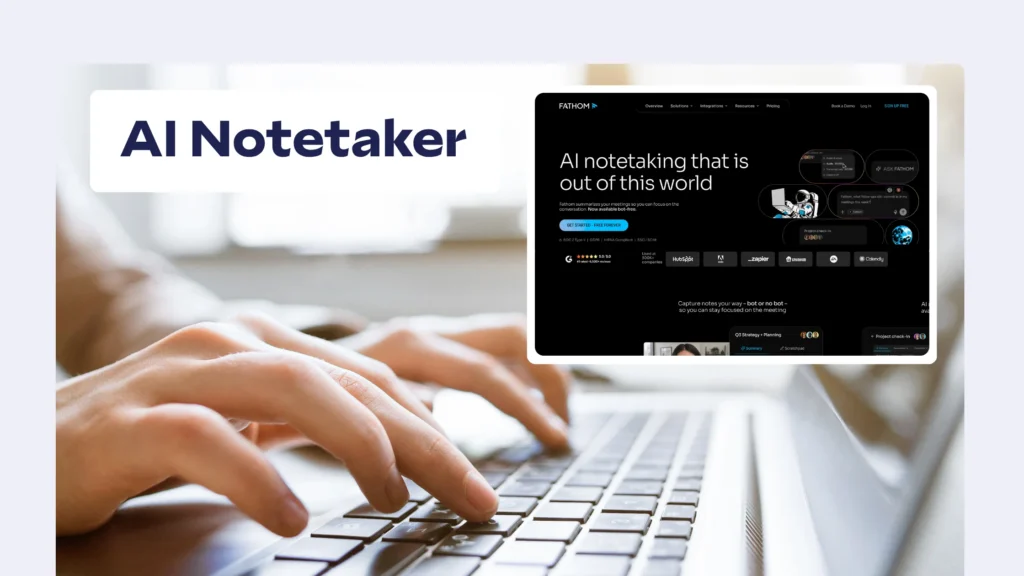
AI Meeting Notetakers
One of the easiest wins? An AI notetaker.
These tools can join meetings, summarize conversations, capture action items, and often sync directly with your CRM.
Popular options include:
Instead of wondering what someone said during minute 37 of yesterday’s meeting…
You’ll actually know.
Automation
The more your software communicates, the less you have to.
Platforms like:
- Zapier
- AI-powered webhooks
- Native AI automations built into many platforms
can automatically move information between your CRM, bookkeeping software, scheduling platform, email marketing, payment processor, and website.
Your business starts running like one connected system instead of twelve strangers awkwardly standing in the same room.
In a nutshell? Your business should work while you’re working.
Here’s something a lot of entrepreneurs don’t realize: The best software doesn’t work alone.
It works together. Automation platforms connect your favorite business tools so information flows automatically instead of relying on copy, paste, and crossed fingers.
Your CRM can update your projects.
Your bookkeeping software can organize transactions.
Your AI can draft emails, summarize customer conversations, prepare marketing campaigns, and help manage repetitive tasks without starting from scratch every single time.
Just don’t forget security. Seriously.
As you connect more software together, passwords, API keys, and authentication tokens become incredibly valuable. A password manager and strong security practices should be at the top of your priority list—not the bottom.
And then there’s your website. Every CRM. Every email. Every Google search. Every social media profile.
Eventually… They all point back to one place. Your website.
It shouldn’t become another platform you have to babysit every weekend.
That’s why Layerly exists.
We build custom websites in just five days, then continue managing updates, hosting, maintenance, and ongoing improvements through our website subscription service. We even use AI behind the scenes to work faster while real humans handle the strategy, design, copywriting, and SEO.
Because your website should be your hardest-working employee…
Not your newest side hustle.

The bottom line
The best small business tools all have one thing in common: they give you your time back. Your CRM keeps you organized. AI helps you work smarter. Payroll runs itself. Email marketing nurtures leads. Automation connects everything together.
Your website should be doing exactly the same thing. Instead of becoming another item on your to-do list, it should quietly generate leads, improve your online presence, and support your business growth while someone else handles the updates. We’ll gladly volunteer for that job.
Get started with Layerly. Book a call today!
